Blue roan is a black-and-white mixture in the roaned areas, with black patches possible. The fine mixture can look grey-blue from a distance. The Royal Kennel Club lists Blue Roan and Blue Roan & Tan separately from Black & White.
What does a blue roan coat look like?
The Cocker Spaniel Club’s colour guide illustrates light and dark examples. It explains that the proportion of dark and white hairs varies, as does the size and position of patches. A name therefore allows variation rather than setting one fixed appearance.
For a useful visual reference, the Breed Council’s illustrated colour guide places named examples together. Use the labels to compare the patterns, rather than assuming one photograph represents every blue roan.
Reference: The Cocker Spaniel Club: roan, ticking and tan markings · Cocker Spaniel Breed Council: illustrated colour guide
Compare blue roan with similar colour descriptions
The Royal Kennel Club standard separates bicolours, tricolours and roans. That is more precise than using spotted or speckled as though those words identify one particular pattern. These are appearance clues, not a way to determine a dog’s registration colour from a small image.
Simplified colour-pattern illustrations. Real coats vary, and dense ticking can resemble light roan; these swatches do not confirm an individual dog’s colour.
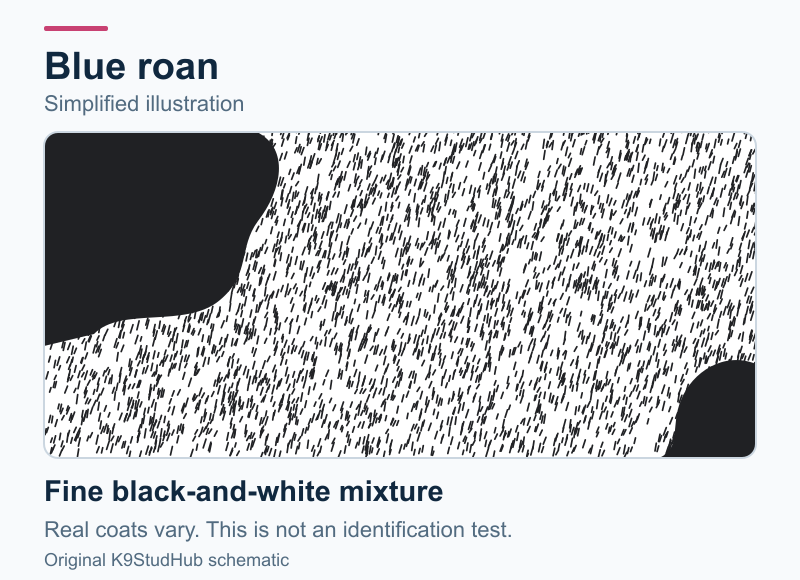
Blue roan
Fine mixed hairs beside a larger dark patch.
Original pattern illustration — K9StudHub. Copyright K9StudHub. Original schematic, not a photograph.
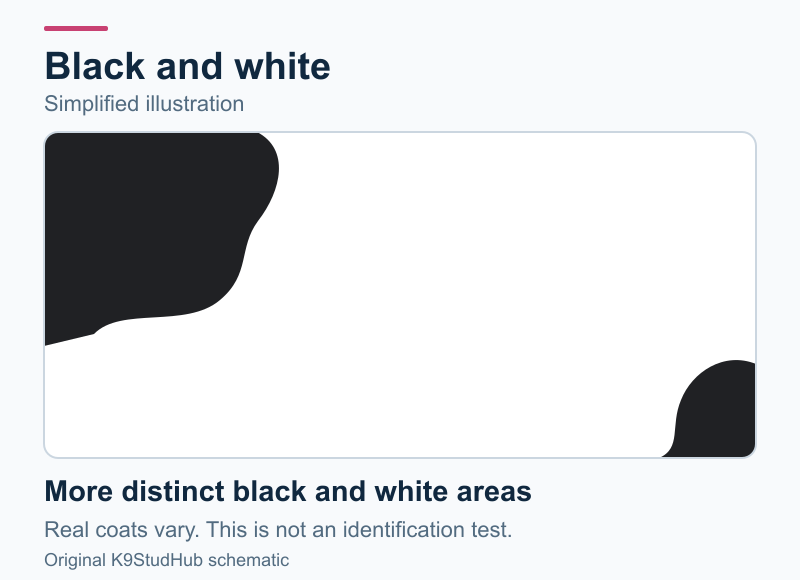
Black and white
Clearer white areas beside solid black patches.
Original pattern illustration — K9StudHub. Copyright K9StudHub. Original schematic, not a photograph.
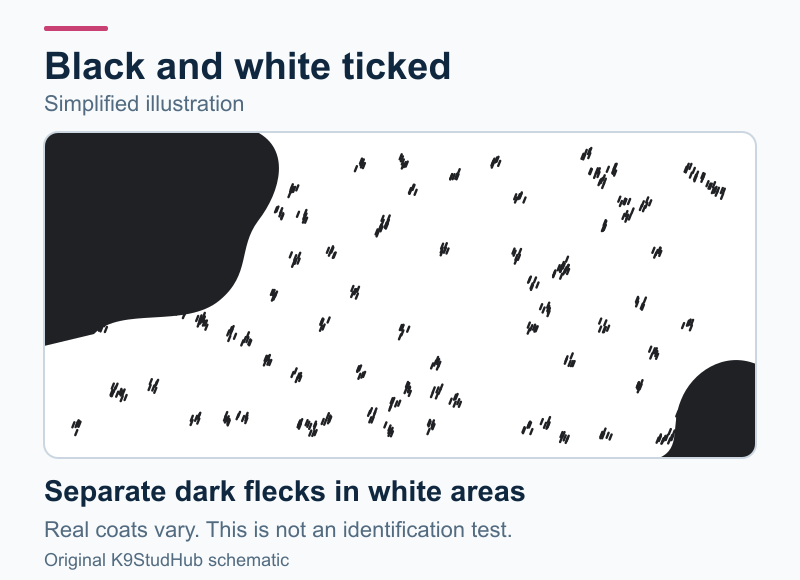
Black and white ticked
Separate dark flecks; real ticking can be denser.
Original pattern illustration — K9StudHub. Copyright K9StudHub. Original schematic, not a photograph.
Swipe across to see every column. With a keyboard, focus the table and use the arrow keys.
| Description | Useful visual clue |
|---|---|
| Blue roan | A fine black-and-white mixture, sometimes alongside larger black patches |
| Black and white | More distinct black and white areas; the standard allows ticking as well |
| Black and white ticked | Black flecks in white areas; dense ticking can resemble light roan |
| Orange roan | Orange and white hairs mixed in the roaned areas |
| Blue roan and tan | Blue-roan pattern with additional tan markings |
Reference: Royal Kennel Club: Cocker Spaniel breed standard · The Cocker Spaniel Club: roan, ticking and tan markings
Why light and dark blue roans can look so different
Light and dark are descriptions of variation within blue roan. The Royal Kennel Club’s breed-standard colour list names Blue Roan and Blue Roan & Tan, without separate light and dark categories.
A distant photograph can hide the detail needed to distinguish neighbouring descriptions. Look at the same dog in more than one view before deciding which comparison is useful.
Reference: Royal Kennel Club: Cocker Spaniel breed profile and colours
Roan and ticking: be careful with a quick identification
Dense ticking can look similar to light roan, as the breed club illustrates. This is a useful warning against treating every speckled coat as the same pattern.
If the wording matters, ask the breeder to explain the colour they are describing and compare it with the name on the dog’s registration information, where available. A breed club can help clarify terminology. Leave an uncertain label uncertain instead of forcing a confident identification from one crop.
If a black-and-white description looks grey in a photograph, check a closer view before assuming the wording is wrong. Ask whether the seller means ticking or roan. Aim for a clearer explanation of that particular dog, with any uncertainty still visible.
Reference: The Cocker Spaniel Club: roan, ticking and tan markings
A colour label does not tell you working or show background
Blue roan answers a question about appearance. Working and show refer to different breeding emphases within the Cocker Spaniel breed. The Cocker Spaniel Club discusses those types separately from its colour descriptions.
Treat these as separate pieces of information when reading about a dog. Ask about its family background rather than inferring that background from a blue roan coat. A colour description also does not establish that a dog has been trained for work or has a show record.
Use three views when comparing the pattern
Start with a whole-body view to see where the larger dark and pale-looking areas sit. Then look at a closer view of a roaned area, followed by the head and legs if the description includes tan. These views help answer different visual questions.
Compare pictures taken in similar, natural light where possible. A warm indoor photograph and a cool outdoor photograph can give different colour impressions. A tightly cropped face may show little of the body pattern.
If the available images do not make the pattern clear, ask for clarification. Leave the description uncertain rather than forcing an identification from one view.
Keep the colour preference in perspective
It is reasonable to like a particular coat pattern. The Royal Kennel Club nevertheless advises that colour is only one consideration when choosing an individual dog, with health and temperament taking priority. A recognised colour name describes appearance; it is not a quality certificate.
Avoid treating a label such as rare, unusual or premium as an explanation of the dog. Ask what the seller actually means, and keep the wider questions about the individual, breeder and everyday care in view.
For those wider decisions, our Cocker family guide and shedding guide cover household commitment and coat maintenance separately. This colour guide does not predict personality, explain inheritance or provide breeding advice.
Reference: Royal Kennel Club: Cocker Spaniel breed profile and colours
Look beyond the colour when choosing a breeder
Once you understand the coat description, use our breeder-finding guide to prepare the wider questions about the breeder and the dog you are considering.
Read our guide to finding a reputable breeder →Sources & editorial note
An original non-clinical K9StudHub guide. Sources checked by our editorial team; no veterinary review is claimed.