Border Collies come in many colours and patterns, with smooth or moderately long coats. Merle needs particular attention in breeding decisions: merle-to-merle matings carry increased health risks, and the Royal Kennel Club will not register puppies from them.
Which Border Collie colours are recognised?
Black and white is familiar, but the Royal Kennel Club’s breed information lists many other colours and combinations, including brown and white, tricolour, blue merle, sable and lilac.
The breed standard permits a variety of colours and says white should not predominate. That is a description for the breed standard—not a diagnosis of an individual dog’s health.
These three photographs show examples, not every recognised colour. Labels follow the source descriptions; lighting and screens can affect how a coat looks. They are not K9StudHub listings or proof of health, parentage or genetic status.
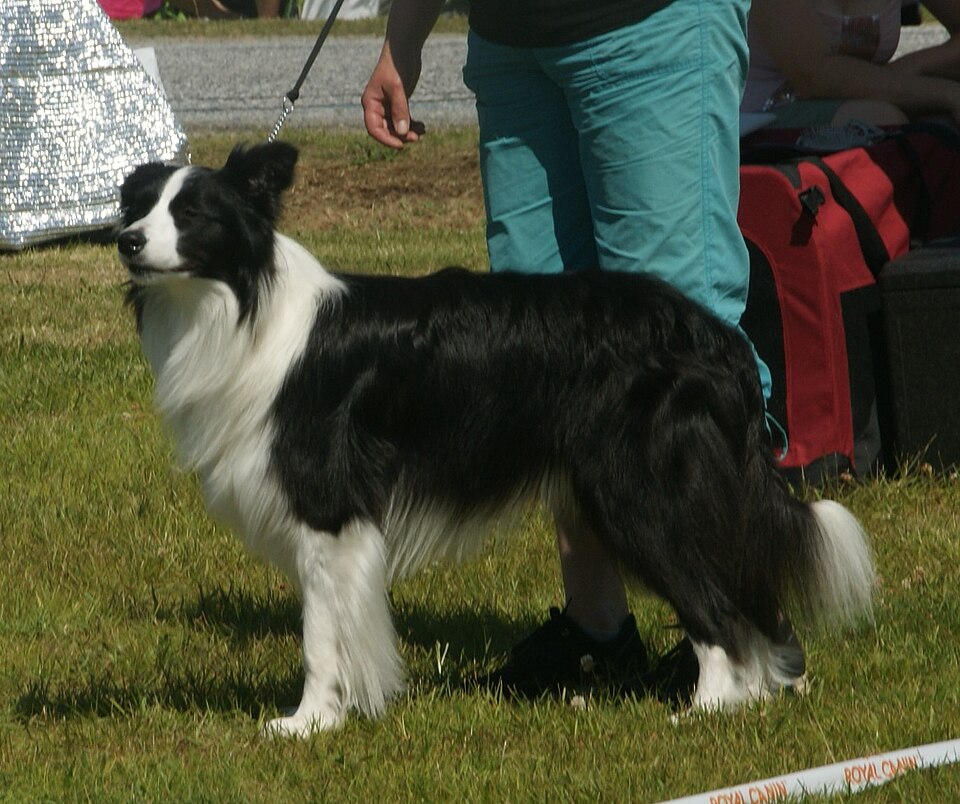
Black and white
A familiar combination, shown here with a longer coat. Coat length and colour are separate features.
BorderCol1.jpg — Canarian. CC BY-SA 4.0. Resized by Wikimedia; no further image edits by K9StudHub.
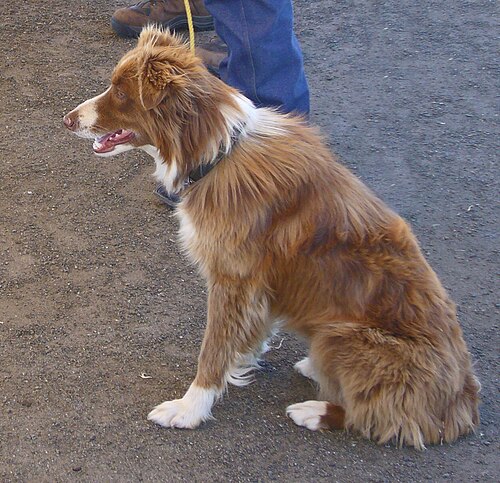
Red and white
The source describes this dog as red. Colour names can vary; ask what a breeder means by their description.
Border Collie red.jpg — chad_k; source edit by Pharaoh Hound. CC BY-SA 2.0. Source edit credited above; resized by Wikimedia. No further image edits by K9StudHub.
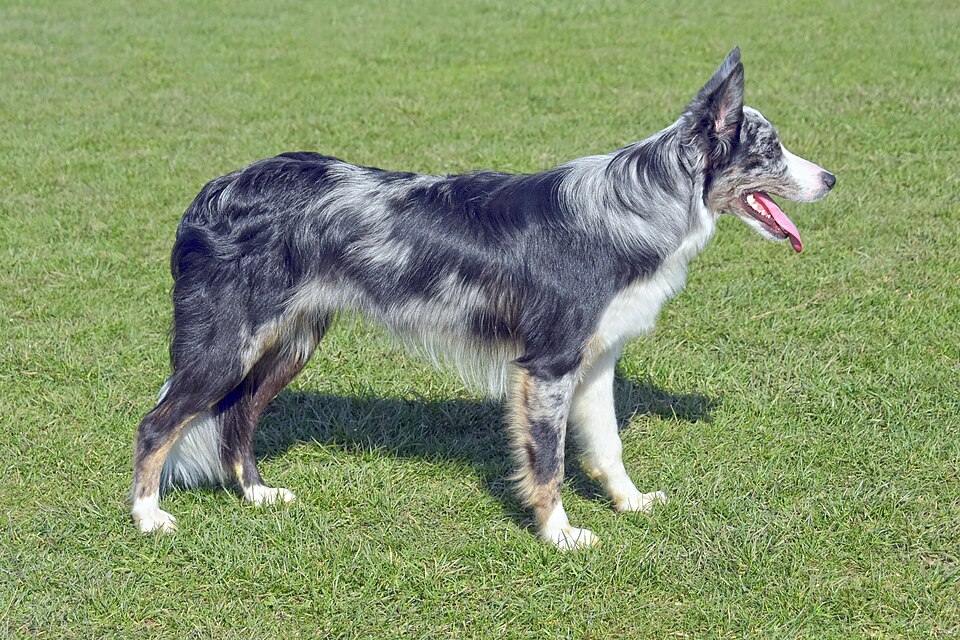
Blue merle
The mottled markings are visible in this example. A photograph cannot confirm a dog’s genetic test result or breeding suitability.
Border collie blue merle, lateral view.jpg — Joselodos. CC0 1.0. Resized by Wikimedia; no further image edits by K9StudHub.
Reference: Royal Kennel Club: Border Collie colours and health guidance · Royal Kennel Club: Border Collie breed standard
Smooth coat or moderately long coat?
The breed standard describes two coat varieties: smooth and moderately long. Both have a dense topcoat and a soft, dense undercoat; the longer variety has more pronounced furnishings around the neck, hindquarters and tail.
Before choosing a puppy, ask what coat care the breeder recommends and what you should expect as the puppy matures. Choose a grooming routine you can maintain, not just a coat you like in a photograph.
What does merle mean?
Merle describes an inherited coat pattern, often seen as mottled or marbled areas. It is not a separate breed. Colour terminology can be confusing, so ask the breeder to explain exactly what they mean rather than treating every unfamiliar label as a special variety.
If merle status is uncertain, do not make a breeding decision from appearance alone. Ask for qualified genetics advice about appropriate testing and interpretation.
Reference: Royal Kennel Club: merle inheritance and mating restrictions
Why merle-to-merle mating is different
Dogs inheriting two merle variants have an increased risk of serious eye and ear problems, including blindness or deafness. The Royal Kennel Club states that it does not register dogs from merle-to-merle matings.
That is a welfare issue, not just a paperwork problem. Do not arrange such a mating. If an accidental mating has occurred, speak to your vet for advice about the pregnancy and the puppies’ care.
Reference: Royal Kennel Club: merle inheritance and mating restrictions
Does a rare colour make a better puppy?
A colour label cannot establish temperament, suitability for your household or the quality of the breeder’s care. Be cautious when a sales pitch spends more time on rarity than on the dog’s needs and health evidence.
Ask the same practical questions whatever the markings. What are the parents like to live with? Which screening results can you see? What does the breeder know about the family history? What support will be available after collection?
Do not let a deposit deadline or an attractive photograph rush those conversations. You are choosing a dog to care for, not a colour to collect.
Choosing a Border Collie stud: assess the pairing first
Start with both dogs’ health, temperament and suitability. Use the current breed screening guidance and ask for original results; a list of tests without the results does not answer the question.
Review the pairing with appropriate veterinary or genetics advice, including any uncertainty around merle. A non-merle pairing is not, by itself, a guarantee of healthy puppies.
Once the important checks are clear, discuss fees, practical arrangements and written terms. Colour should not displace any of those steps.
Reference: Royal Kennel Club: Border Collie colours and health guidance
Look past the coat. Ask for the evidence.
Use the stud-selection checklist to organise the health, temperament and compatibility questions before discussing a mating.
Read the stud-selection checklist →Sources & editorial note
This guide has not received independent veterinary/genetics review. General information only; seek advice for your circumstances before acting.
Original article published . This revision: .