Temperament deserves the same attention as physical health. Consider both parents’ behavioural histories and seek individual advice through your vet and a suitably qualified behaviour professional before progressing with breeding plans.
Good temperament means more than knowing commands
A dog that sits on cue has learned a useful skill. That alone does not establish how they feel around strangers, unfamiliar dogs or situations they find difficult. Equally, excitement or imperfect recall does not, by itself, tell you whether a dog has an unsuitable temperament.
The question is how the individual dog experiences and responds to ordinary life. A training certificate, show result or impressive working performance cannot answer every part of that question.
The Royal Kennel Club’s breeding guidance specifically asks owners to consider temperament alongside health and appearance. It advises against breeding from dogs that are shy, nervous, unpredictable or aggressive. This is a serious selection decision, not a judgement about whether a dog deserves a loving home.
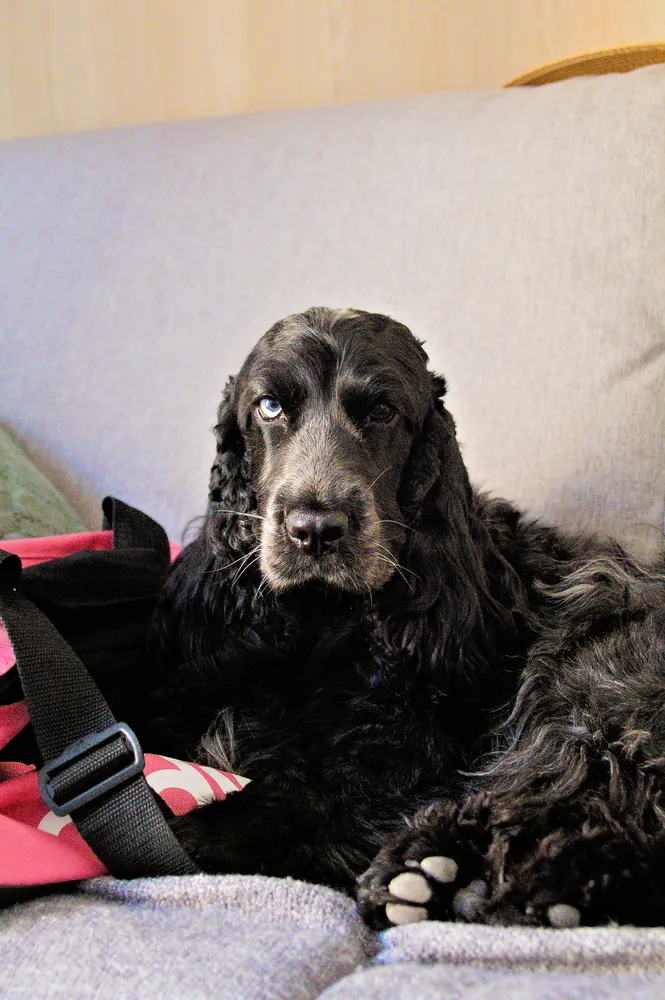
Behaviour in everyday life
Everyday behaviour needs context: one photograph cannot establish temperament or breeding suitability.
Photo on Unsplash — Peter Boccia. Unsplash License. Resized and compressed as WebP; no crop or retouching.
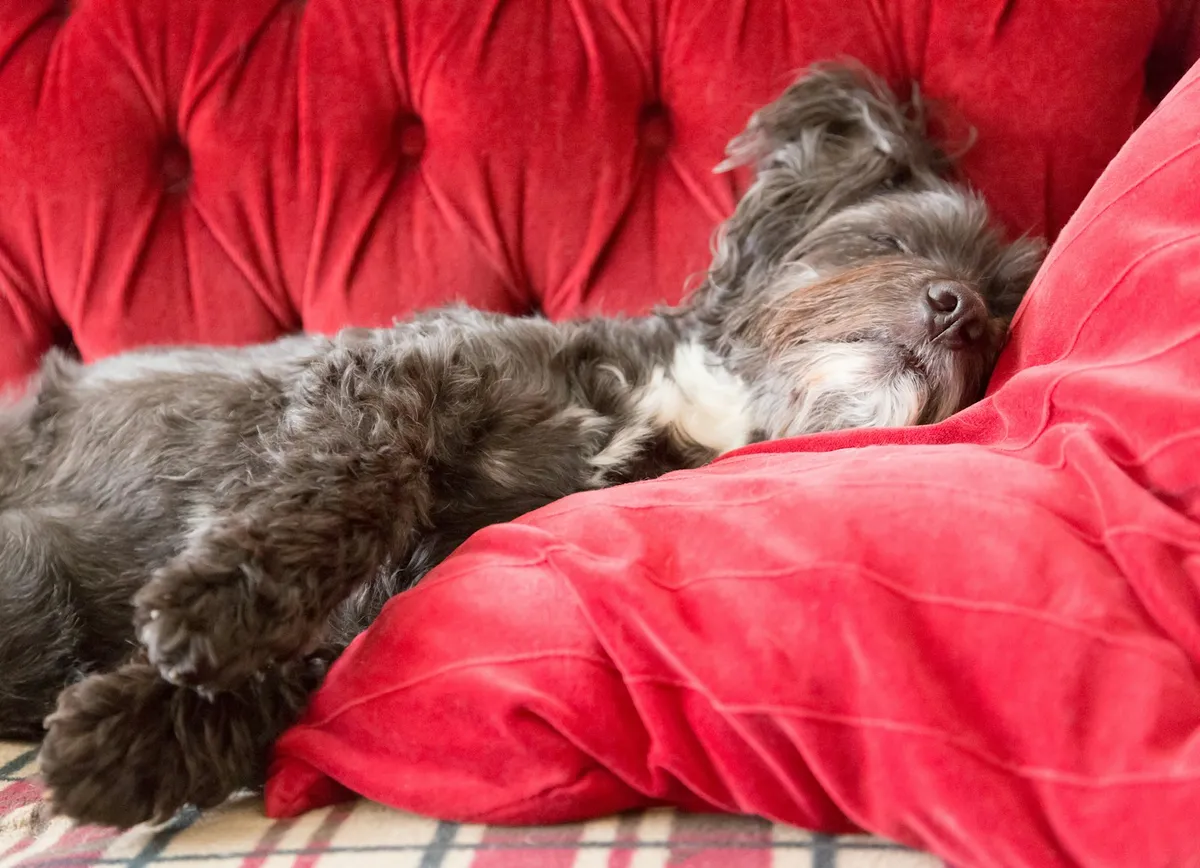
Time to rest
Rest is part of ordinary life. This illustrative photograph is not a behavioural assessment.
Photo on Unsplash — Natalie Kinnear. Unsplash License. Resized and compressed as WebP; no crop or retouching.
Reference: Royal Kennel Club’s breeding guidance
Behaviour has genetic and environmental influences
Research helps explain why temperament belongs in breeding decisions. Morrill and colleagues’ 2022 study found heritable behavioural traits alongside substantial variation within breeds. A breed label cannot reliably describe every individual dog.
Genes matter, but so do development, learning and experience. A puppy does not inherit an exact copy of either parent’s personality, and good training cannot guarantee that a behavioural tendency will not appear in offspring.
Neither upbringing nor a pedigree tells the whole story. Understand the individual dogs you are considering.
Reference: Morrill and colleagues’ 2022 study
Look at the whole history, not the best afternoon
When you care deeply about your dog, it is easy to concentrate on their strongest qualities. A fair assessment also needs the difficult moments. A friendly meeting in a familiar place cannot erase a repeated pattern elsewhere.
Bring factual observations to a professional discussion:
Describe events rather than labelling the dog stubborn, dominant or protective. Dates and context are more useful than an explanation you have guessed. Never provoke a reaction, interfere with food or arrange a stressful encounter to test temperament. These notes support assessment; they are not a home breeding-suitability test.
- What happened, and what was happening immediately beforehand?
- Was it an isolated incident or something that happens repeatedly?
- How did the dog respond, and what happened afterwards?
- Have there been bites, snapping, guarding or situations you regularly avoid?
Take fear and aggression seriously
A dog struggling with fear or aggression needs support, not a breeding plan built around hoping the problem will disappear. Do not book a mating while significant concerns remain unexplored, or treat a calmer prospective mate as a guarantee of balancing them out.
Behaviour can also be affected by pain or illness. The RSPCA’s advice on aggression recommends veterinary assessment and appropriate behaviour support. An online article cannot establish why a particular dog is reacting.
Improvement through training or behaviour work can make an enormous difference to everyday welfare. It is not, on its own, evidence that a dog should enter a breeding programme. Discuss the breeding question separately and explicitly with the professionals involved.
Reference: RSPCA’s advice on aggression
Consider both parents and the puppies’ early lives
These responsibilities apply to the stud dog as well as the bitch. The Royal Kennel Club’s stud-dog guidance states that both potential parents should have good temperament. A sought-after pedigree or successful previous litter does not remove that responsibility.
Breeder choices continue to matter after selecting parents. The APBC’s guide to finding a good breeder highlights temperament, appropriate socialisation and the environment in which puppies are raised. Parent selection and thoughtful rearing work together; neither makes the other optional.
Our guide to finding a reputable breeder can help prospective owners ask about parent temperament and the puppies’ early experiences.
Reference: Royal Kennel Club’s stud-dog guidance · APBC’s guide to finding a good breeder
How APBC can help you take the next step
For a K9StudHub owner considering breeding, the Association of Pet Behaviour Counsellors (APBC) offers a practical route to professional support. APBC is a professional association; its Full members have had their knowledge and practical skills assessed against Animal Behaviour and Training Council standards. That makes APBC more than a collection of advice articles. It provides a way to identify practitioners with assessed professional competence.
Check the member’s role and membership level. A Clinical Animal Behaviourist assesses problem behaviour and develops behaviour-change plans. An Animal Behaviour Technician has a different scope, including preventative advice and supporting the implementation of plans. Associate members are still developing the experience required for Full membership. APBC explains these distinctions.
Start by telling your vet that you are considering breeding and want to discuss your dog’s behavioural history. APBC members work on veterinary referral, recognising that health and behaviour can be connected. Use the APBC directory to find someone with relevant experience, then ask how assessment and communication with your vet would work.
APBC is a professional membership body, rather than a statutory governing body for all dog behaviour practitioners. Its standards and referral route are the relevant reasons to consider it here; an APBC consultation does not automatically establish breeding suitability.
Reference: Association of Pet Behaviour Counsellors (APBC) · Animal Behaviour and Training Council standards · APBC explains these distinctions · APBC members work on veterinary referral · APBC directory
Keep learning, without treating advice as clearance
Rebarkable, founded by trainer and behaviour consultant Ali Smith, offers accessible training and behaviour reading. Use it to deepen your understanding and prepare better questions, alongside individual advice from your vet and an appropriately qualified practitioner.
Reference: Rebarkable
Discuss your dog’s behaviour before proceeding
Choosing not to breed can be the responsible outcome. Your dog can remain a much-loved companion without becoming a parent. Put their welfare ahead of your original plans, and make the breeding decision a clear part of your professional discussions.
Find an APBC behaviour professional →Sources & editorial note
An original K9StudHub editorial guide researched against the sources below. It has not received independent veterinary or clinical behaviour review. APBC and Rebarkable have not endorsed this article.
- Royal Kennel Club’s breeding guidance
- Morrill and colleagues’ 2022 study
- RSPCA’s advice on aggression
- Royal Kennel Club’s stud-dog guidance
- APBC’s guide to finding a good breeder
- Association of Pet Behaviour Counsellors (APBC)
- Animal Behaviour and Training Council standards
- APBC explains these distinctions
- APBC members work on veterinary referral
- APBC directory
- Rebarkable